Empathy-first system prompt
Rewrite the system prompt so empathy rules come before intake rules.
Conversational UX
Conversational AI is everywhere right now. Every startup wants a bot. Very few have thought carefully about what happens when a real, frustrated human actually talks to it.
Earlier this year, I was hired to find out exactly that.
4 mins
My Role
UX Audit Consultant
Proptech AI Startup
WhatsApp Agent UX
The Proptech AI Startup
A US-founded, Dubai-operating proptech startup reached out to me via LinkedIn for a paid UX consultation. Incorporated in Delaware, their real traction is here in the Gulf. They've already signed contracts in Dubai, which means they're not just building in theory. They're live, they have users, and those users have problems.
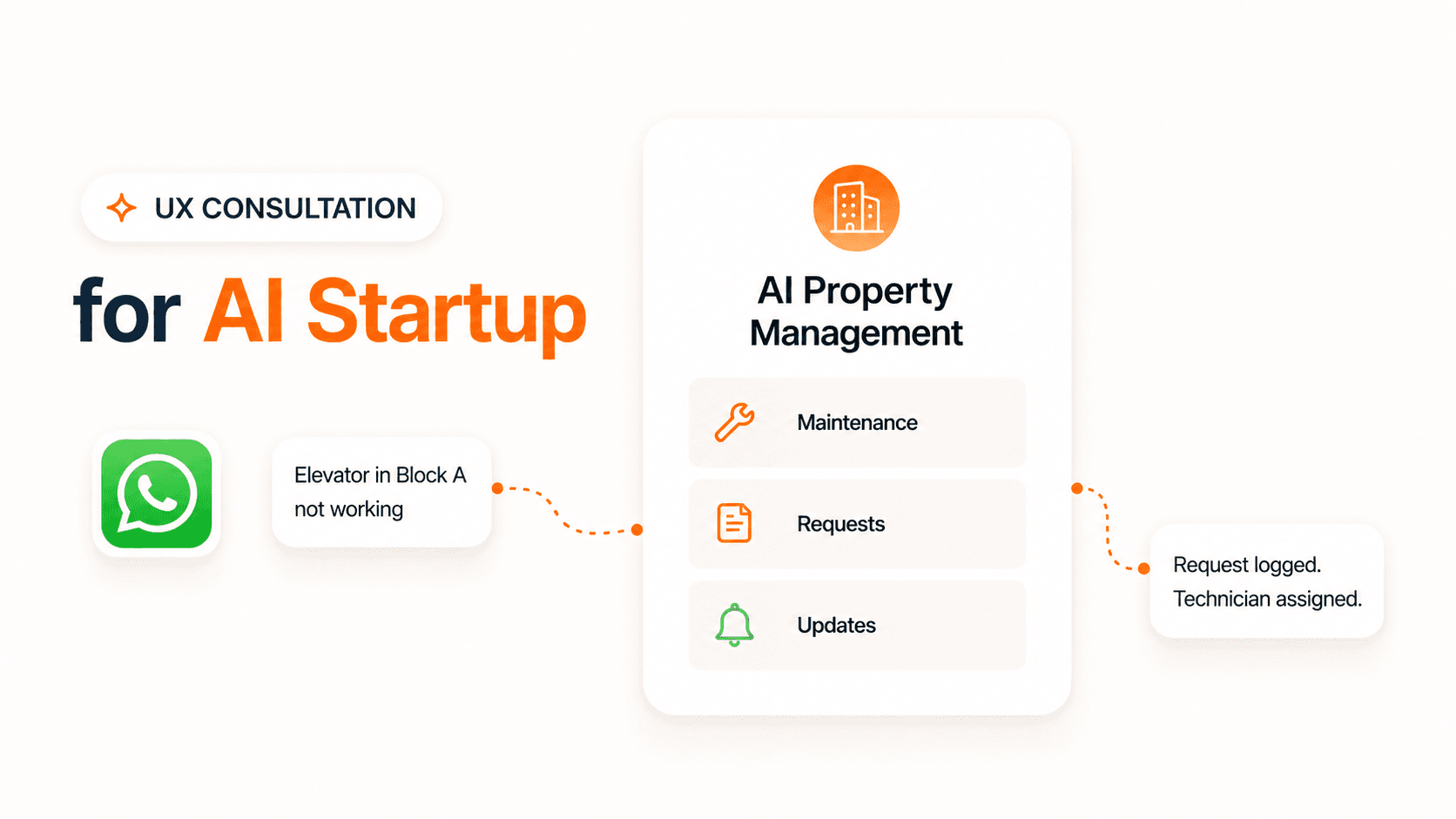
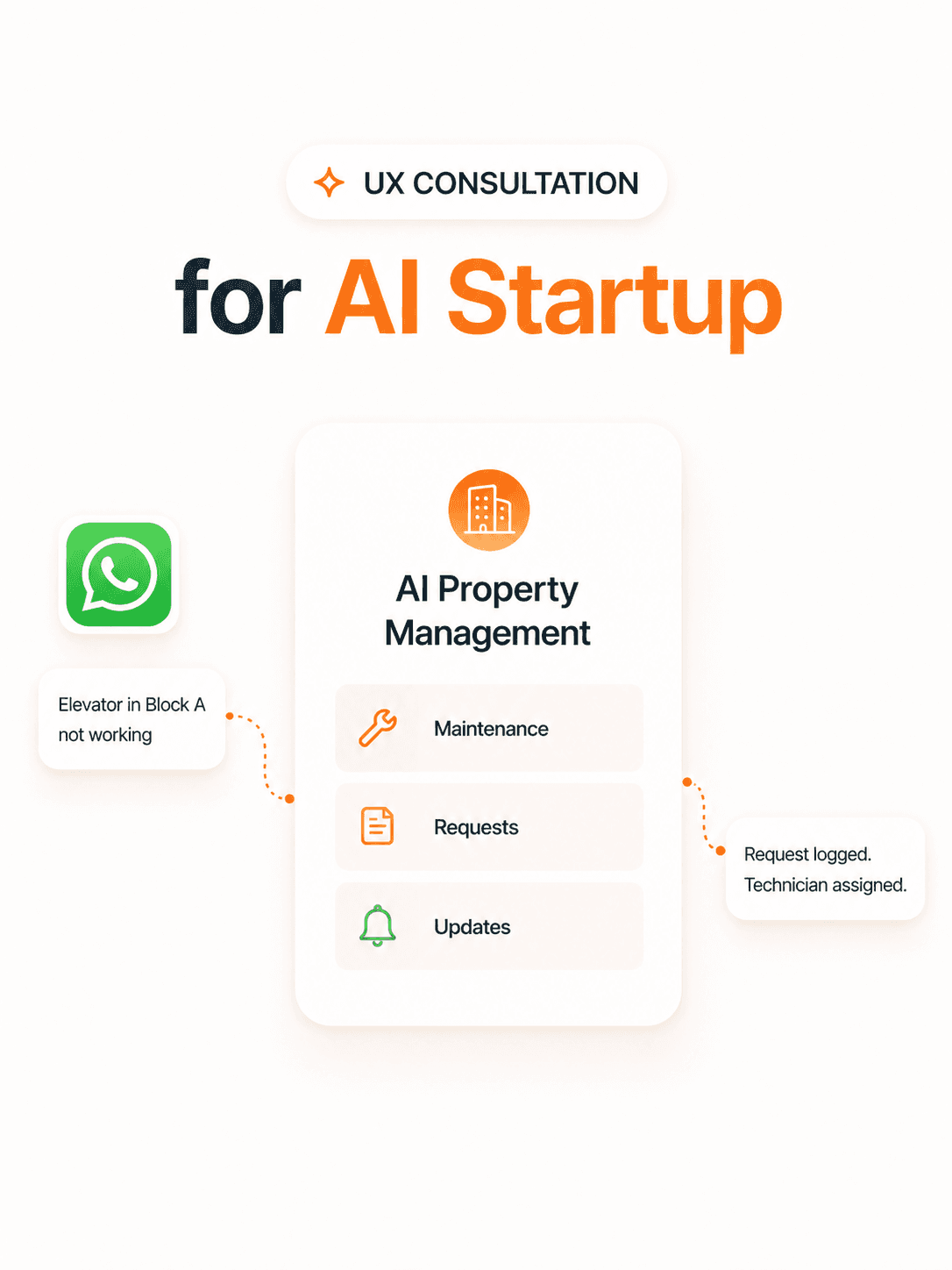
Their product is a conversational AI agent that runs entirely over WhatsApp. No app to download, no portal to log into. Residents of residential and commercial properties text in when something goes wrong, pest control, maintenance issues, general requests, and the AI handles the rest. It gathers details, contacts the technician, and coordinates the visit. End to end, automated.
What they needed from me was a full conversational UX audit. Where were users dropping off? Where did the experience feel broken? How do you fix it?
So I did what any UX consultant worth hiring does. I became the user.
What Conversation UX is?
Most people think UX means screens, buttons, and flows. Conversational UX strips all of that away. The interface is the language. Every word choice, every question sequence, every moment carries weight. On a screen, a confusing form can be scrolled past. In a chat, one wrong question ends the conversation entirely.
You don't get a second screen. You get one message.
The bot didn't know how to handle a frustrated human
I messaged as someone who'd been dealing with a cockroach problem for two weeks with no resolution. Angry, tired, done with it. The bot's response? Immediate ask for name and building number.
When someone is venting, they need to feel heard before they'll cooperate with anything. Jumping straight to data collection signals that the system only cares about the ticket, not the person raising it.
How To Solve for it: Lead with acknowledgment. One short, warm line before anything else. "That sounds really stressful, I'm sorry you're dealing with this." Then ask about the problem. Then, only after that, collect the details.
Questions were coming in the wrong order
Even in neutral conversations, the sequence was off. Name and unit number were being asked before the bot even understood what the issue was.
The order should always be:
Clarify the problem
Confirm urgency
Then ask for personal details, with a reason attached
That last part matters. "To assign the right technician, I'll need your building name" lands completely differently than a cold "What's your building number?" Context makes people cooperative.
It asked for the same thing three times in a row
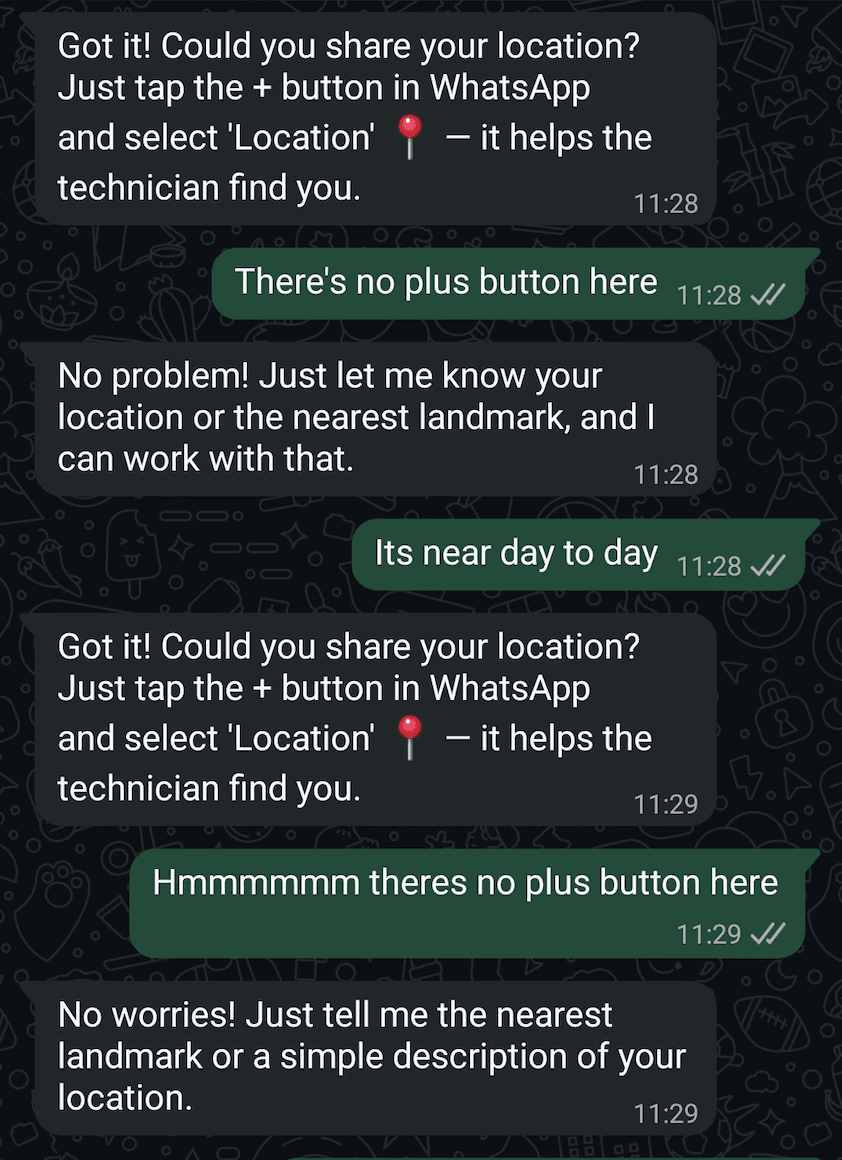
Location information was requested three consecutive times without offering any alternative.
"If a user hasn't answered after two attempts, a third request doesn't get you the data. It gets you a blocked contact."
Two attempts maximum. If they still haven't responded, offer a fallback. Can't share a location pin? Type your building name and nearest landmark. Accept it and move forward.
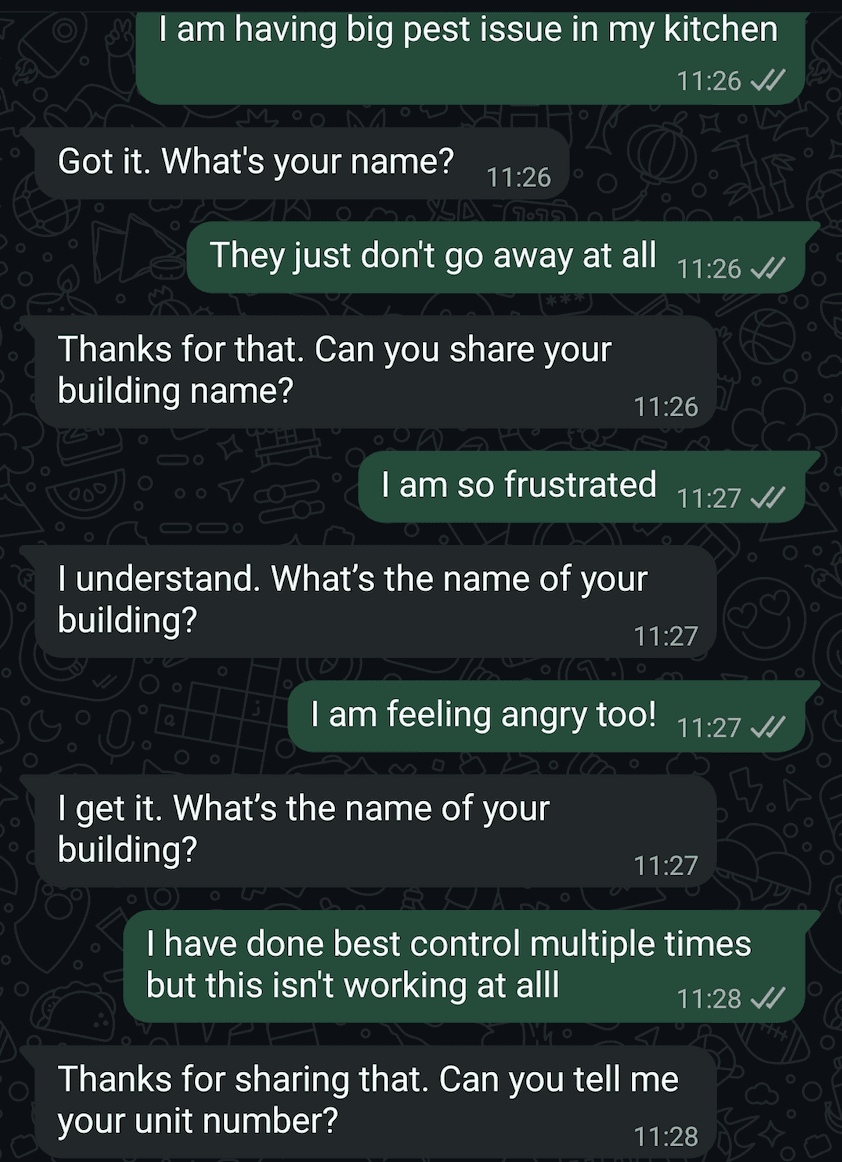
The WhatsApp UI instructions given by Agent to the user were outdated
The bot told users to tap a "plus button" to share their location. That button hasn't existed in WhatsApp for a while.
Small detail, massive consequence. A user who can't find what you're describing assumes the bot is broken and stops engaging. The correct instruction: tap the paperclip/attachment icon, select Location, send current location. And if they still can't find it, drop the pin requirement entirely and accept a typed address. Not every user is technically confident and the bot shouldn't assume otherwise.
Scheduling fell apart completely by Agent of coordinating between Vendor and User
A user requested a 1pm visit. The technician confirmed 2pm. The bot told the user 2pm was booked. Nobody asked the user if 2pm worked.
That meant the user had to restart the whole conversation to change it. A failure in coordination logic, not just tone.
How to solve it: Never confirm a time to the user until the vendor has confirmed it. If there's a conflict, surface it: "The technician is available at 2pm instead of 1pm. Does that work for you?" One extra message. Completely avoids the problem.
© 2026 Design Portfolio All rights reserved. Designed by Bisma Munawar