Data Audit of Offers Section
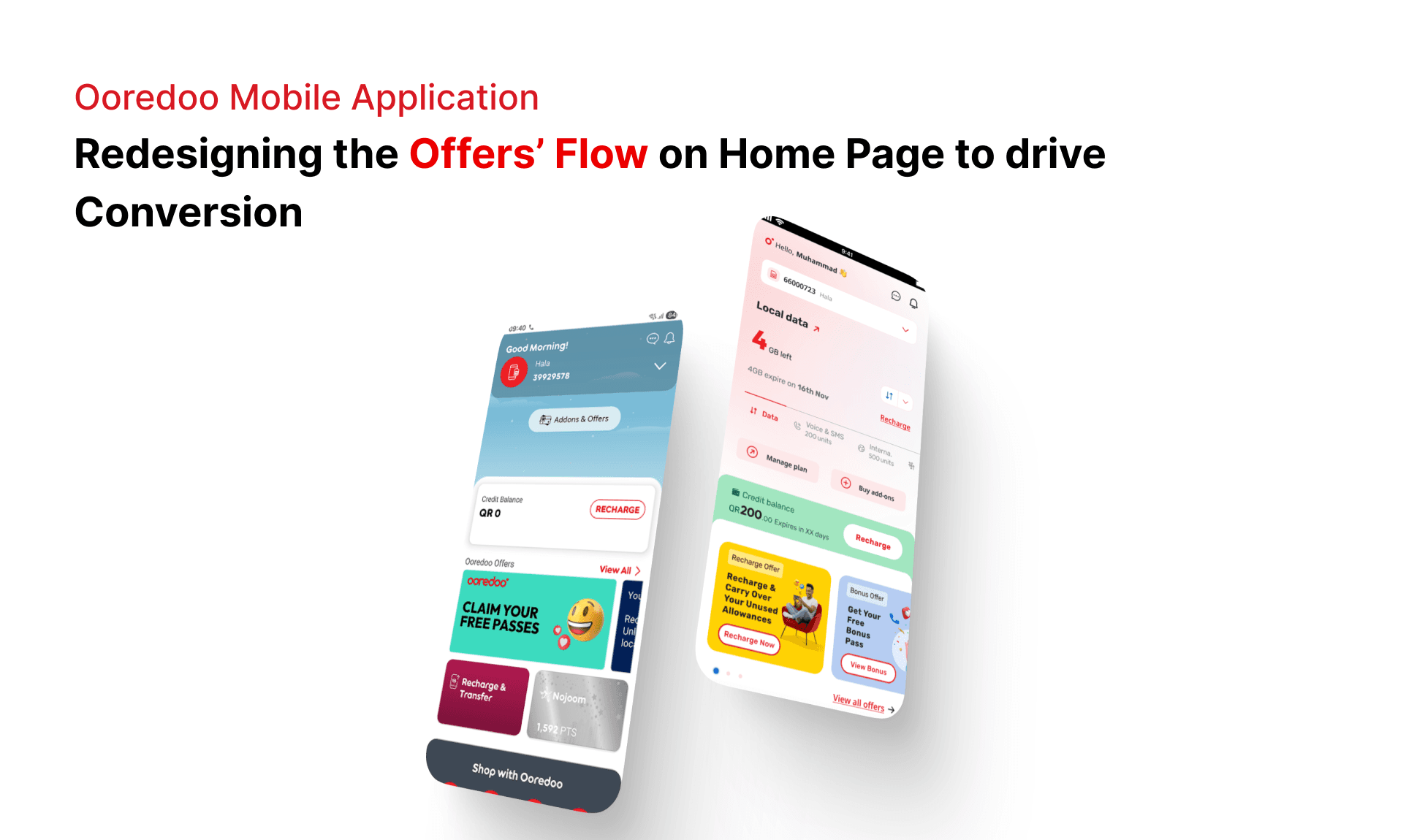
The Offers Section was right there on the Homepage. Users were pouring in. So why was only 1 in 5 of them clicking in?
What Does an 19% Engagement Rate on Your Most Valuable Homepage Section Actually Tell You?
It tells you that the section could be uplifted and draw much more attention than it is currently. But what was the reason behind this statistic?
A prepaid customer who wanted to grab a local mobile data deal had to scroll past seven banners to find it. A postpaid user who tapped on an offer got redirected to an app store they did not ask to visit. A customer who saw a banner they liked tapped through only to find the price hiding one more screen away.
The offers were live. The campaigns were running. But the design between the offer and the redemption was leaking customers at every step.
An offer section redesign was needed that could solve Discoverability → Relevance → Clarity → Redemption.
My Role
Senior UX Designer
Platform
B2C Mobile App
Type
UX Benchmarking & CRO
Data Analysis
Google Analytics 4
400K+ Offer Redemptions
9 Apps Benchmarked
1 in 5 Users Clicking in
How did I define my benchmark metrics?
When I broke down performance homepage carousel by offer position, the primacy effect was impossible to ignore. The first banner dominated views and redemptions every time regardless of offer quality. Offers sitting in positions three and beyond were generating views but almost no redemptions. Not because those offers were weak. Because they were structurally buried.
I also looked at how different CTA styles were performing. Informational banners with passive language were generating high view counts but low click rates, fewer than 1 in 4 users clicking through. Offers with clear transactional CTAs were achieving nearly double that click rate despite lower overall visibility. Passive banner language was suppressing performance across the board.
By the time I started benchmarking, I had a precise problem list. I was not benchmarking for inspiration. I was benchmarking for solutions.
What I delivered
I pulled and interpreted the offers section data analytics to identify the patterns.
I UX audited the core friction points across the prepaid and postpaid offer journeys.
I conducted the competitive benchmark across 9 apps using the pain points as my research brief.
I delivered full redesign of carousel architecture, banner design system and journey continuity.
I presented the complete body of work to postpaid & prepaid directors and secured alignment with marcom team.
I analysed data from Google Analytics 4 linked to the B2C App and I mined numbers and patterns
I used the data and UX auditing insights to inform the benchmarking.
What were the highlights from the benchmarking?
I analysed 9 apps across telecom and B2C categories. For each one I was evaluating offer discoverability, banner legibility, journey length, CTA effectiveness and targeting relevance. The audit friction points were my filter for everything I looked at.
On offers carousel structure, the strongest performers kept carousels short and navigable for lower cognitive load. Du structured offers under category tabs so users could find relevant offers without scrolling through a mixed set. Etisalat used a vertical layout optimised for mobile scanning.
On personalisation and targeting, Etisalat was the standout. They served offers based on account type and user profile, surfacing internationally relevant deals to the right users. This was the direct solution to the targeting mismatch I had documented in the audit.
On journey length and redemption flow, Qatar Airways reduced screens between discovery and redemption to as few as possible. Du's swipe to confirm mechanic added tactile clarity at the point of commitment. Vodafone Turkey achieved a one-tap plan upgrade with terms and payment on a single screen.
On third-party handoffs, Careem showed users a clear destination message before any external redirect. Botim used action-driven CTAs throughout, Send Money Home, Buy Now, Activate in Seconds, rather than passive language on transactional offers.
On offer banner design, every well-performing banner shared the same four properties. Single dominant message. Clear image zone. Specific CTA. Mixed case copy. No All CAPs.
My Process - Behind The Scenes
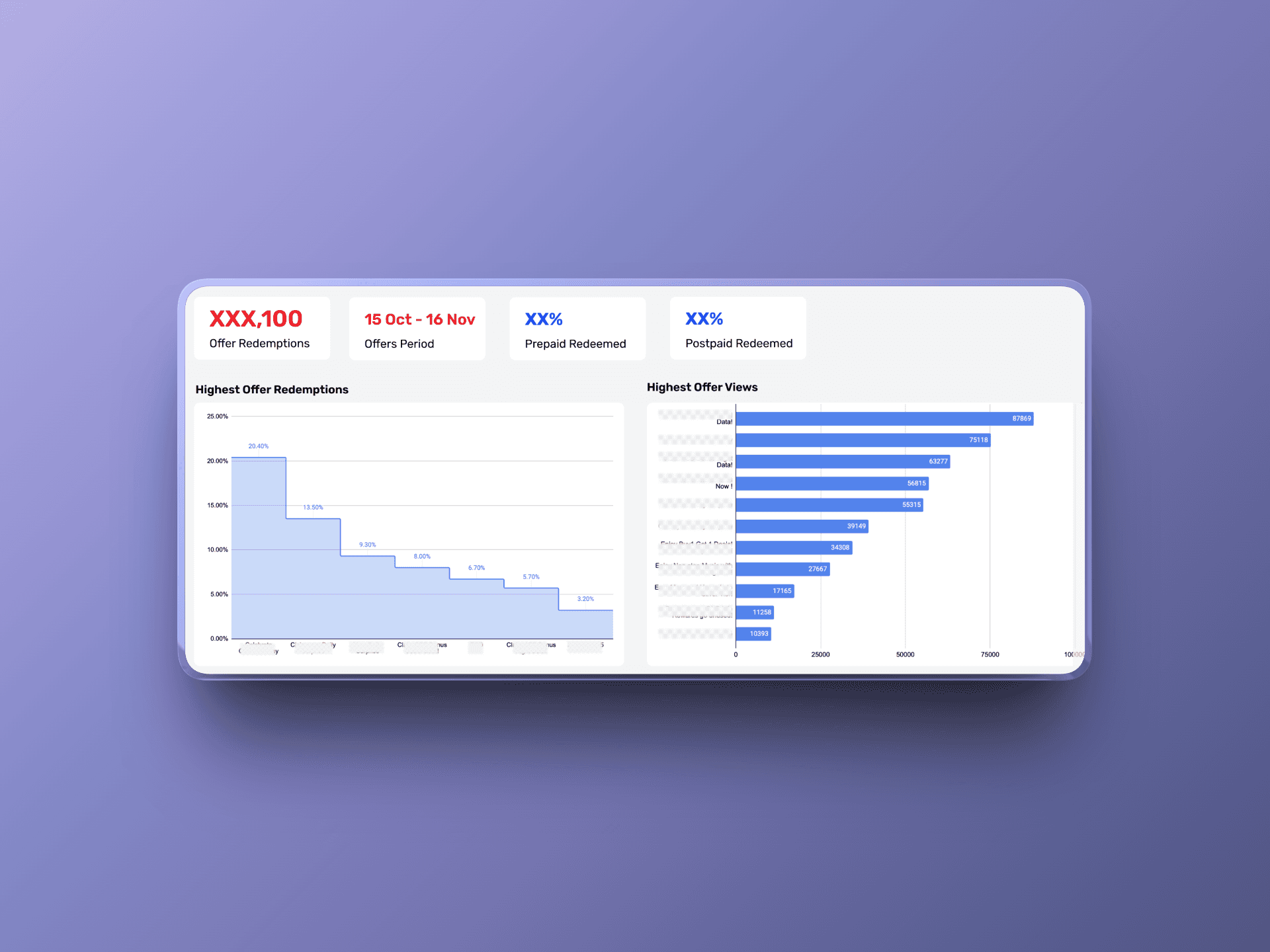
Compared Offers Views Vs Redemptions Data
Drew insights on which offers were top performing and need premium real estate
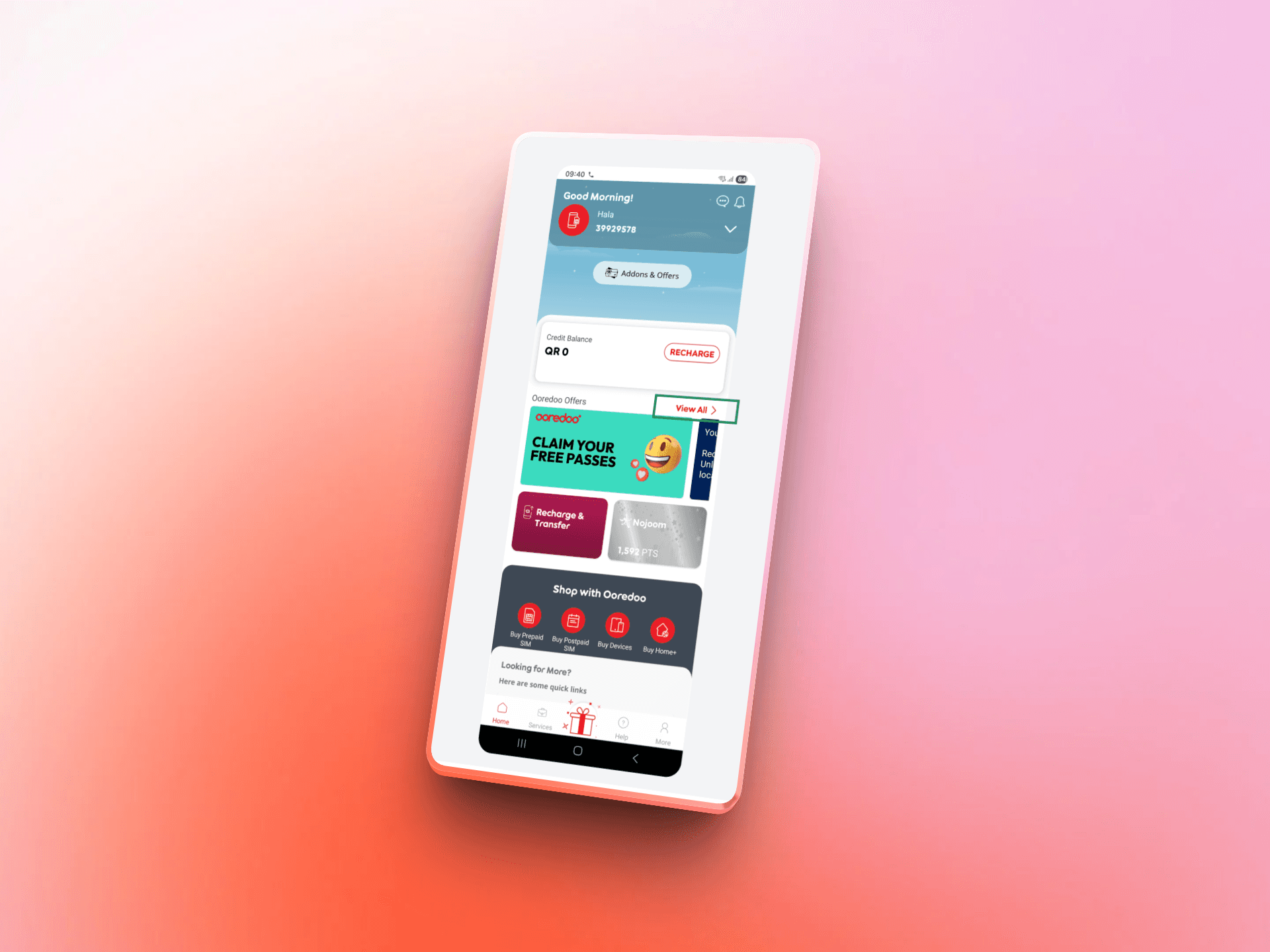
Analysed Home Page traffic Vs Offers Section traffic
Drew insights to understand if Offers Section is gaining traction from organic visits or mostly by Clevertap ads
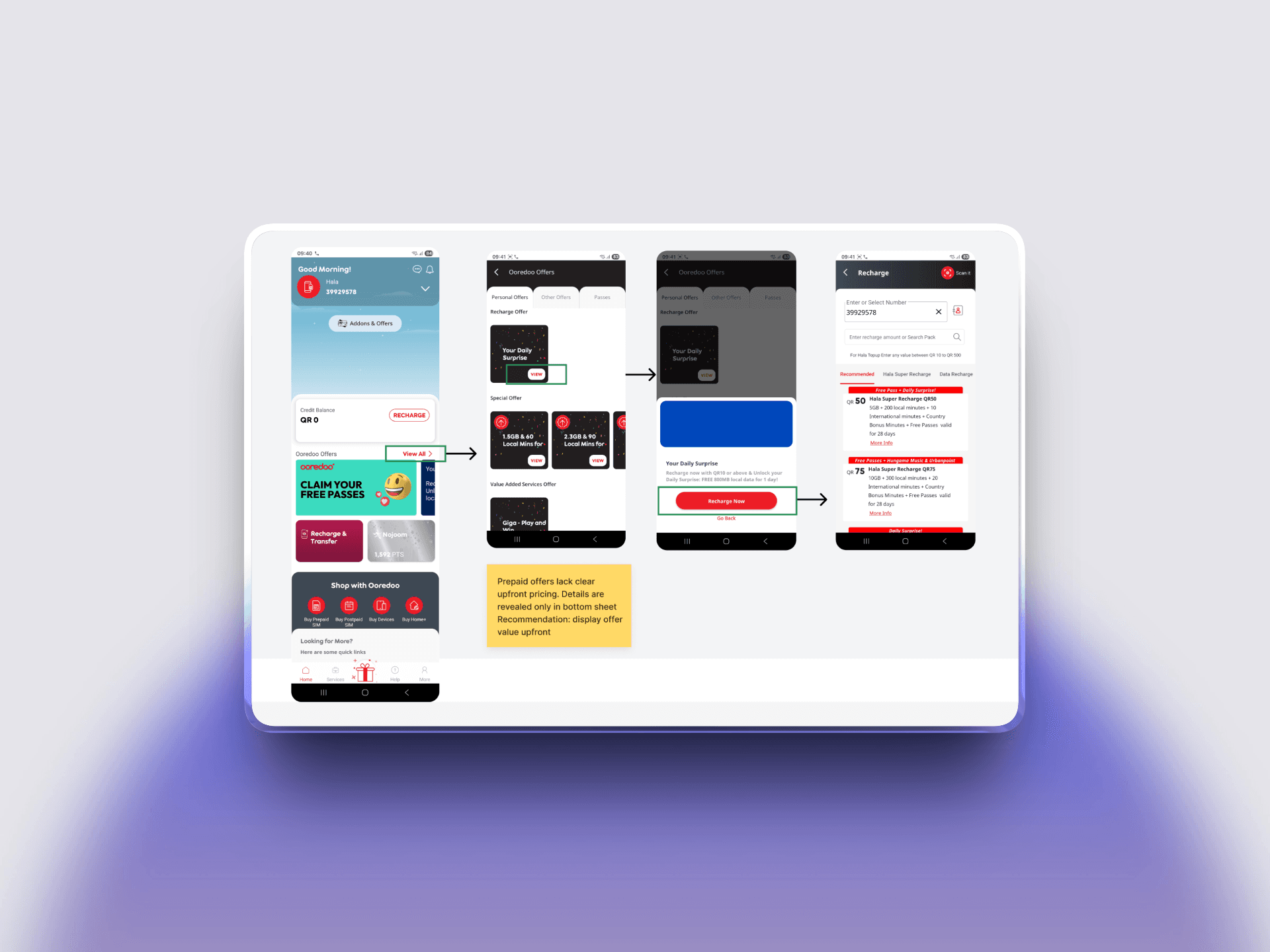
Validated the assumption of Offers Page Churn with Data
Confirmed users were dropping off after showing intent and traced each exit back to a specific friction point.
How did I change the structure of Home Page Offers Section?
The carousel architecture.
I reduced the carousel from 7 to 8 banners down to a maximum of 3 to 5. Fewer simultaneous choices produce faster and more confident decisions. I introduced a visual offer type system: recharge offers, CVM offers, Nojoom offers, bonus passes and partner offers each received a distinct colour and a category label tag at the top of the banner. A returning user can identify the type of offer before reading a single word. Recognition, not reading.
Banner positions rotate across sessions to prevent the learned invisibility that static carousels produce over repeat visits. Offer Campaigns are introduced on a rolling basis so the section always feels current rather than stale.
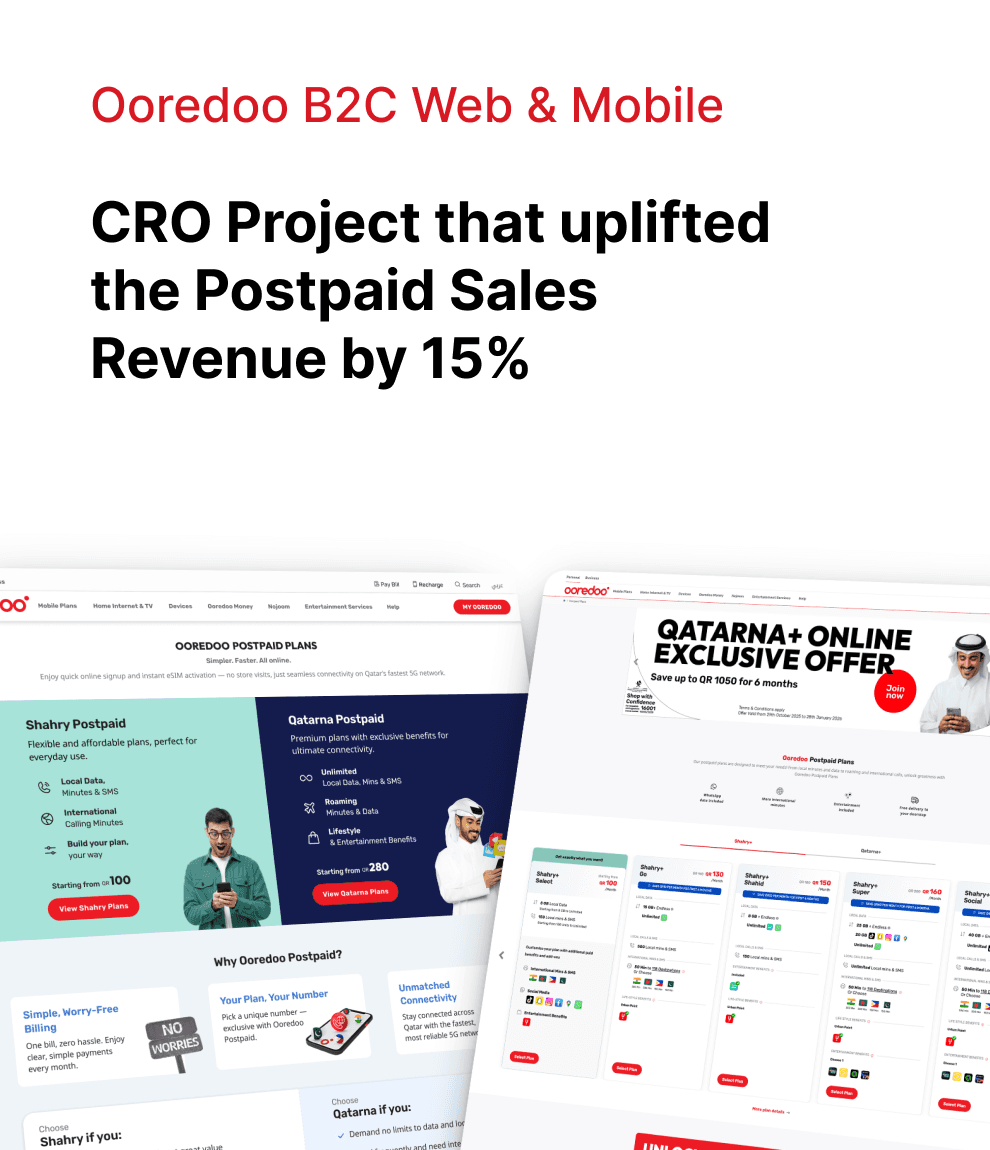
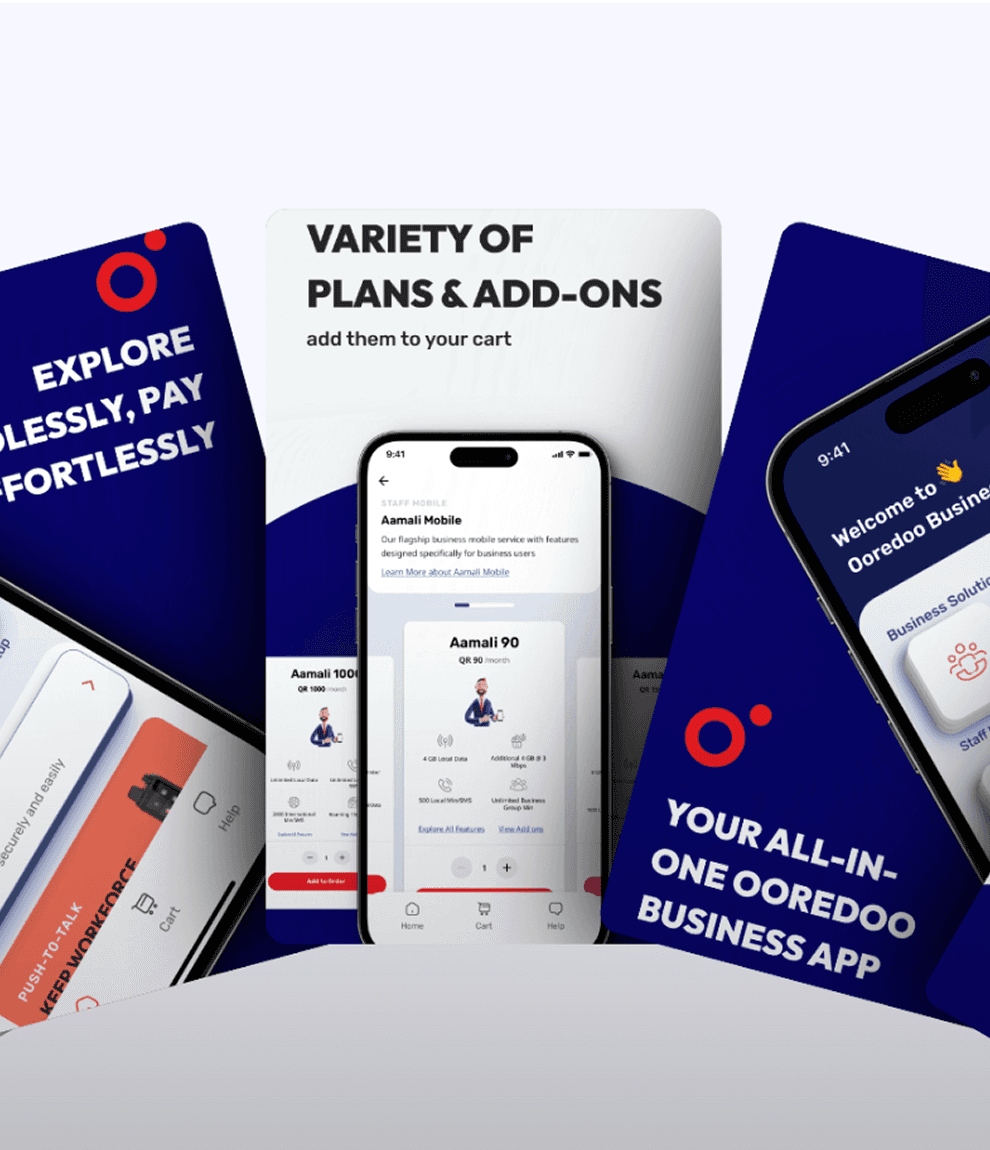
I not only designed the Home Screen section and Offers Landing Page but also introduced new banners.
The banner design system.
The design system standardised every banner with five rules:
Every banner now carries a category label tag at the top. Every banner has a single action-driven CTA. Recharge Now. Claim for QR5. Redeem Points. Not Learn More.
ii. Language that tells users exactly what will happen and exactly what they will get. All headlines use mixed case, not all capitals. Mixed case preserves word shapes and speeds scanning on small screens.
iii. Banner imagery sits in a dedicated zone so text is never placed over it.
iv. Partner logos sit in a fixed position alongside the Ooredoo logo for co-branding consistency.
v. A countdown timer template was created for time-sensitive campaigns. Marketing can populate offer details and set the timer without a bespoke design each time. Speed of execution and design consistency delivered together.
💡The banner format was optimised for mobile portrait viewing, replacing the landscape format that was compressing content and reducing legibility across the existing creative set.
How I solved for the problems surfaced in UX Audit of the Offers flows
Offer redemption journeys.
For prepaid recharge offers I surfaced the offer value and CTA directly on the homepage card, removing the step of having a bottom-sheet entirely. Price and Value visible before the tap. Action one step.
For postpaid users the carousel filters by account type. Postpaid users only see postpaid relevant offers. The targeting mismatch problem is removed at the source.
For third-party redirects a brief in-app transparency card appears before any external handoff. One screen telling users where they are going and why. The context shift becomes intentional rather than disorienting.
For the app download banner specifically I replaced the external store redirect with an in-app preview screen explaining the product and its benefits before presenting a single CTA to download. The user makes an informed decision rather than arriving somewhere unexpected with no context.
What I learned
“I presented the full body of work to Leadership and Postpaid Senior Directors. Data first. Benchmark second. Redesign third. Every recommendation anchored to the analytics, the benchmark evidence, or named research principles. 15 minutes in, the Postpaid Director said "it is music to my ears".
The conversation shifted quickly from evaluating the direction to asking when it could go live. Implementation questions, not directional ones. That is the outcome every senior designer works toward. It made me beam with sunshine!
This project reinforced the value of sequencing in presentations. I walked into every competitor app already knowing what I was looking for. The benchmark became a solution-finding exercise rather than an inspiration exercise after data analysis.
And the CRO lesson I will carry forward: it is not just about the landing page. Sometimes it starts at the thumbnail. And sometimes the highest-impact intervention is not a redesign. It is a reorder.”
Bisma
View Full Case Study?
Want to see the full story? The complete deck includes all research, wireframes, iterations and final designs.
View the Next Case Study ->
© 2026 Design Portfolio All rights reserved. Designed by Bisma Munawar